Understanding The Waqf (Amendment) Bill And Its Impact On Waqf Properties In India
Updated: 21-09-2025 at 7:33 AM


2k
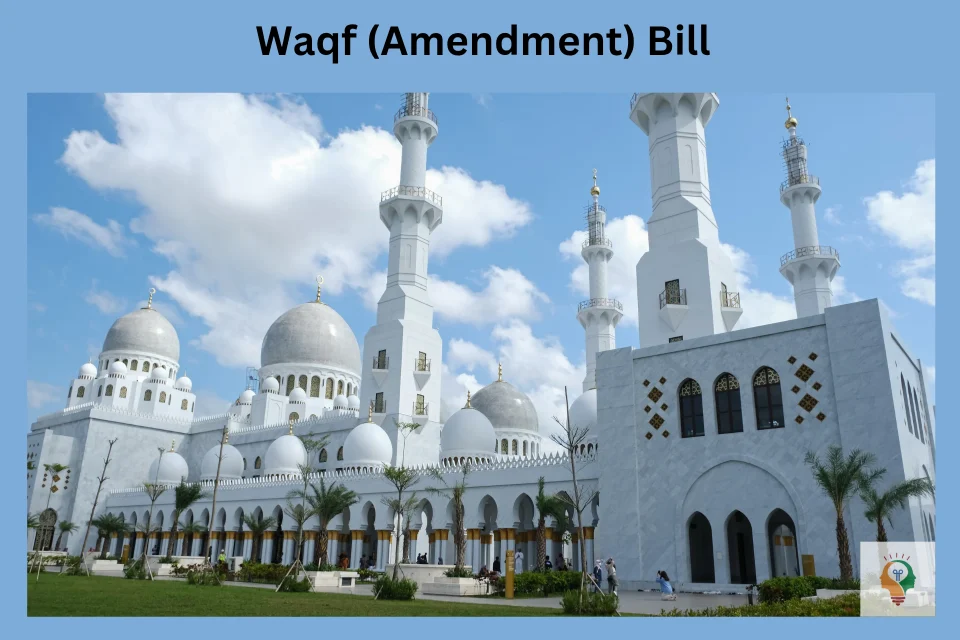



Under Islamic law, Waqf properties remain significant assets that comprise considerable portions of Indian land ownership. The Waqf (Amendment) Bill recently brought discussion about the proper management of such properties to the forefront. This article investigates the range of Waqf assets, including the proposed modifications and their effects on property management, along with community rights protection.on
Scope And Scale Of Waqf Properties In India
Various religious facilities with commercial and agricultural land make up the wide range of properties controlled through Waqf in India. WAMSI data indicates that India has 872,324 registered immovable Waqf properties, which total 900,000 acres in size. The Central Waqf Council supervises various State Waqf Boards as they manage these properties.
Distribution of Waqf Properties:
-
Graveyards: Approximately 150,569 properties (17%).
-
Mosques: Around 119,200 properties (14%).
-
Commercial Establishments: Shops and houses form two of the prominent commercial establishments, with numbers at 113,187 and 92,505.
-
Agricultural Lands: Comprise approximately 140,784 properties (16%).
The Sachar Committee calculated the estimated ₹1.2 lakh crore market value of Waqf properties back in 2006.
Also Read: What Is ‘Saugat-e-Modi’? A Special Eid Kit For Muslims
Key Provisions Of The Waqf (Amendment) Bill
The Waqf (Amendment) Bill has implemented multiple essential changes dedicated to improving Waqf property management through transparent measures:
1. Inclusion of Non-Muslim Members:
The legislation seeks to improve transparency through its proposal of non-Muslim participation in both the Central Waqf Council and State Waqf Boards.
2. Government Oversight on Disputed Properties:
Through this provision, the government receives authority to handle ownership disputes of contested Waqf properties, which seeks to clarify ambiguous legal situations.
3. Application of the Limitation Act, 1963:
Through the inclusion of the Limitation Act of 1963, the bill intends to streamline Waqf property claims by establishing deadlines for legal actions to shorten contentious court proceedings.
4. Enhanced Transparency Measures:
The amendments work to establish advanced monitoring solutions for Waqf asset management through technological programs that maintain clear records while blocking asset misappropriation.
Also Read: Uttarakhand Uniform Civil Code (UCC): Everything You Wanted to Know
Debate And Perspectives
Multiple opinions arise from the Waqf (Amendment) Bill introduction.
-
The government maintains this bill targets corruption while building transparency and improving Waqf property management practises.
-
The opposition expresses scepticism because the expanded membership scheme, together with government oversight, allegedly threatens Waqf institutions' autonomy and threatens minority rights protection.
Conclusion
The Waqf (Amendment) Bill constitutes an essential advancement in the way India governs Waqf properties. Although the proposed changes introduce better management and transparency measures, they challenge minority rights, as well as the autonomous governance of Waqf institutions. A harmonious combination of various viewpoints becomes necessary because amendments need to fulfil their designated purposes without harming the interests held by different communities.
Get the latest updates on government schemes and policies with Jaagruk Bharat. Join India's biggest Jaagruk Bharat community. Share your thoughts, questions, and favourite topics with us.
0

0
2k
0
0
2k Views
0

No comments available