Traffic Challan — Check, Pay & Contest Online 2026
Updated: 23-04-2026 at 3:30 PM


1k
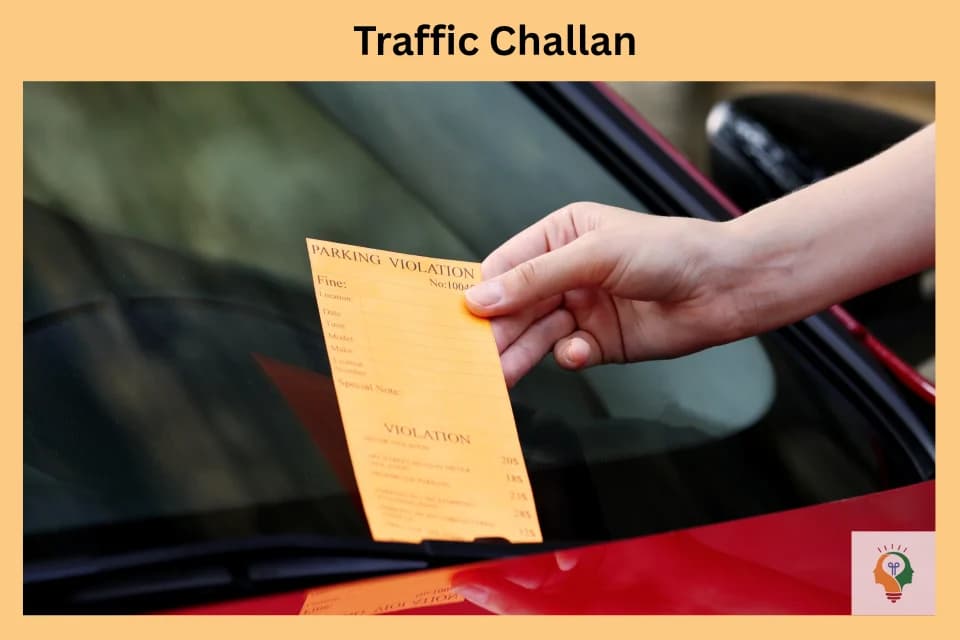


Traffic rules and regulations are an integral part of maintaining law and order in the country, and for the protection of people living and driving in India. In India, traffic-related rules and regulations are governed by the Motor Vehicles Act of 1988, and one of its components concerns traffic challans.
A traffic challan is an official notice that is issued to people when they are caught breaking the prescribed road-related rules and regulations. Whenever one gets notified of a traffic challan issued in their name and for their vehicle, they are legally liable to pay the fines mentioned in it before the deadline to avoid more serious consequences.
Read the article to learn more about the specifics of the traffic challan, ranging from its meaning and latest rules to the detailed process of payment and traffic challan check online procedure, including information on fines based on the type of violation committed and tips on avoiding traffic challans.
Read More On Be aware Of The Vahan Parivahan Phishing Scam?
Parivahan Challan Overview
The table below summarises key details of the Traffic Challan that one should know about.
| Traffic challan meaning | An official notice is issued when one violates the traffic rules and regulations. |
|---|---|
| Governing law | Motor Vehicles Act of 1988. |
| Types of challan | Physical challan and electronic challan (e-challan). |
| Issued by | Traffic police officials or automated surveillance systems. |
| Common violations that attract traffic challans | Overspeeding, crossing signals before time, not wearing helmets or seatbelts, etc. |
| Mode of payment | Online via the Parivahan portal or state govt transport sites, or offline by visiting traffic police stations. |
| Consequences of non-payment | Fines may increase, vehicle-related services may be blocked, license suspension or cancellation, etc. |
| Can a traffic challan be contested? | Yes. |
| Latest rules concerning challans in 2026 | Fice strike rule, changes in the amount of fines, sending electronic challans, etc. |
What Is A Traffic Challan?
A traffic challan is an official notice issued by the traffic police officials to those individuals who are caught breaking the road-related rules and regulations that every driver is required to follow while driving on the roads of India. Traffic challans are governed under the Motor Vehicles Act of 1988, which contains all related provisions regarding them.
A usual traffic challan comprises important information, such as the type of violation committed (for example, overspeeding, crossing signals, not wearing a helmet or a seatbelt, etc.), date and time of issuance of a challan, location, and the exact amount of fine which is to be paid by the person. The payment process is also made available via both offline and online platforms so that people can clear their pending challans without any difficulties or inconvenience.
Traffic challans were not only introduced for punishing people, but are also aimed at increasing compliance with the relevant rules and regulations by all those driving on the roads of India. The whole challan system ensures the safety of everyone on the roads and reduces instances of accidents or other such unfortunate events.
How To Pay Traffic e-Challan?
Individuals who have received traffic challans on their vehicles can make the payment using both online and offline means based on one’s convenience, preference, and ease. Both the online and offline processes of clearing challans are broken down below in steps for one’s better understanding and clarity.
e-Challan Pay Online Process Via Parivahan’s Website
Step 1: Please visit the official website of Parivahan. One can also download the mobile application of Parivahan (available for both Android and iOS operating systems) and do the challan payment clearance process.
Step 2: Enter the required details on the portal, like your challan number, vehicle number, or driver’s license number. Ensure that the numbers you entered are accurate and then click on ‘Get Details’.
Step 3: After cross-checking your entered information with the information in the database, the system will display all the challan-related details of your vehicle.
Step 4: Navigate to the option concerning ‘Pay Now’ and select your preferred mode of payment. Available payment options are through UPI (Unified Payments Interface), debit or credit card, net banking, etc.
Step 5: After a successful transaction, your challan will be considered clear, and the same will reflect on the portal as well after a few minutes. The portal will also provide you with a transaction ID. Keep it safe for future reference.
Paying e-Challan Online Via State Transport Websites
Step 1: Visit the official state transport websites of your respective state government authorities.
Step 2: On the homepage of the site, you will find an option related to the payment of violation fees. Select the most appropriate option from the various types of fees, like parking fees, spot fines, etc.
Step 3: Enter all the information that the portal needs to proceed, such as your vehicle’s registration number.
Step 4: Navigate to the option for ‘Pay Now’ and select your preferred mode of payment. Available payment options are through UPI (Unified Payments Interface), debit or credit card, net banking, etc. Make the payment and clear your pending challans.
Offline Payment Procedure
Step 1: Please visit the nearest traffic police station and request the officials to help you in paying traffic challans.
Step 2: Provide a copy of your challan to the police officer, as they would not accept cash payments without it; therefore, be extra vigilant before going to the police station to clear challans.
Step 3: Make the payment in cash, after which the police official will provide you with a receipt proving that you have cleared all the pending challans issued for your vehicle.
Also Read on Wearing Slippers While Driving? Know About This Legal Implication For Traffic Rules
How To Check A Challan By Vehicle Number?
Vehicle owners can easily check pending challans associated with their vehicle using their vehicle number. The steps of traffic challan check online are as follows:
Step 1: Please visit the official website of the Parivahan portal or its application.
Step 2: On the homepage, click on ‘Check Online Services’ and then select the ‘Check Challan Status’ option.
Step 3: The system will provide you with three alternatives. i.e., checking challan status either via challan number, driver’s license number, or vehicle number. Choose the last option and enter your vehicle registration number.
Step 4: The system may also ask you to provide the last five digits of your chassis number or engine number for verification purposes. Ensure to fill in the correct numbers, as any errors will lead to invalid results.
Step 5: The system will cross-check the information you entered. All pending and paid challan-related details associated with your vehicle, such as the type of violation, the date of challan issuance, and the exact amount of the fine, will be displayed on your screen.
Can A Traffic Challan Be Contested?
Yes, as per the Motor Vehicles Act of 1988, any vehicle owner who received a traffic challan can challenge it if they think that the grounds of issuance of a challan are not justified legally. This directly implies the fact that a traffic challan is not a legal order set in stone; people have been given the right to challenge them if they believe it has been issued unfairly.
Please note that the right to contest traffic challans can only be exercised if one manages to establish valid and strong acceptable reasons proving its unfairness. Some of the common valid reasons are:
-
If the authorities misidentified the vehicle and recorded wrong details, meaning the challan was originally for someone else’s vehicle but has been mistakenly issued to yours.
-
A challan was issued again for the same offence for which a challan had already been issued.
-
The alleged traffic violation for which the officials issued the challan never happened.
-
Already paid for a challan, but it is still showing pending, and others.
Challan Contest Process
A vehicle owner with an unjust challan can contest the challan in court, but only by paying 50% of the amount of fine mentioned in the challan. Please note that it is extremely important for one to act quickly and as per the given timelines. However, if a vehicle owner neither contests nor pays the challan even after 30 days of receiving the challan order, they will be legally liable to pay the whole amount of the challan within the next 15 days, or else more serious punitive measures will be taken against them.
We have mentioned the outline of the legal process of contesting challans in a stepwise manner so that one can get a rough idea:
Step 1: Firstly, check all the details, like the date of issue, location, type of violation, photographic evidence, if any, and others, mentioned in the challan order carefully.
Step 2: Gather evidence proving your innocence, such as GPS data, any witness statements, payment receipts (if the challan has already been paid), vehicle use information, etc.
Step 3: Before going to the court, visit the traffic police physically or file a grievance through their online portals, like the Parivahan portal or state government transport sites.
Step 4: If the issue does not get resolved, please approach the traffic courts. You will have to appear before a magistrate and present your case with supporting evidence.
Step 5: After looking at all the sides and evidence, the court will declare its judgment.
Read More On NHAI To Track 100 Toll Plazas With GIS-based Software For Traffic Management
Traffic Fine India 2026
Following the laws in India, there are various types of fines and other punitive measures levied on people if found violating any prescribed rules. The table below presents details concerning types of offence and the specifics of punishment for one’s reference. Note that the exact amount of penalties can vary from one state or city to another.
| Type of offence | Penalty if the person is a 1st time offender | Penalty if the person is a 2nd time or repeat offender |
|---|---|---|
| Overloading the vehicle | Rs 20,000 and an additional Rs 2000 for every extra tonne carried on the vehicle. | – |
| Driving rashly on the roads without care for anyone’s safety | Fine of Rs 1000 or imprisonment for a year, or both. | Fine of Rs 10,000 and imprisonment for two years. |
| Using mobile phones while driving | Fine of Rs 500. | Fine of Rs 5000. |
| Driving over the prescribed speed limit | Fine of Rs 500. | Fine of Rs 5000. |
| Riding without a helmet or a turban | Fine of Rs 100. | Fine of Rs 1000 and scrapping of one’s license for a period of 3 months. |
| Driving under the influence of a substance | Fine ranging from Rs 1000 to Rs 1500. | Fine of Rs 10,000 or imprisonment for a period of 6 months. |
| Driving without wearing a seatbelt | Fine of Rs 100. | Fine of Rs 1000. |
| Driving without a valid driver’s license | Fine of Rs 500. | Fine of Rs 5000. |
| A minor caught driving | Fine of Rs 25,000 or imprisonment for a period of 3 years. | – |
| Driving without a valid vehicle’s Registration Certificate (RC) | Fine ranges from Rs 2000 to Rs 5000. | Fine ranges from Rs 5000 to Rs 10,000 or imprisonment for a year, or both. |
| Driving without a PUCC (Pollution Under Control Certificate) | Fine of Rs 10,000 or imprisonment for a period of 6 months. | – |
| Driving an uninsured vehicle | Fine ranges from Rs 200 to Rs 400. | Fine ranges from Rs 2000 to Rs 4000. |
| Driving without a valid permit | Fine of Rs 10,000. | – |
Latest Rules Concerning Traffic Challan 2026
The authorities have issued some new rules concerning traffic challans. All those rules in force from this year are mentioned below in brief for one’s holistic understanding of the specifics of traffic challans, so that one can act in compliance with the legal rules and regulations:
-
One of the major and most popular rules was the ‘Five Strike Rule’. As per this rule, if any vehicle owner gets five or more traffic violations in just a year, their driving licenses can be potentially either suspended by the police officials for a limited period of time or worse, cancelled permanently based on the types of violations committed. The authorities created and issued this rule to impose stricter punitive measures on people driving on the roads of India, promoting behaviour change.
-
Another important rule concerns strict adherence to challan payment timelines and deadlines. As per the amended rules and regulations, all the vehicle owners of India are instructed to clear the challan payments associated with their vehicles within the prescribed number of days. If not cleared, vehicle-related services for the vehicle in question will be blocked, along with various forms of punishment, like fines or even imprisonment.
-
As India is working on shifting its operations from the traditional paper-based system to the digitised system, the authorities now issue electronic challans (e-challans) to offenders via SMS, email, or on WhatsApp. Such electronic challans are not issued manually but automatically. As soon as the traffic violation gets recorded and noted by advanced cameras (now installed on almost all roads in India), the system issues the challan using the information stored in national databases of vehicles and their registered owners.
How To Avoid Traffic Challans?
The only way one can avoid traffic challans is by following all the necessary rules and regulations mentioned and enforced under the Motor Vehicles Act of 1988. Some of the most important things that most of us miss and then get traffic challans are described below, so that you can keep them in mind and be aware of these minor mistakes:
-
Most traffic challans, especially electronic challans, are issued against basic violations committed by people, like crossing traffic signals before the time, ignoring traffic signs, driving above the prescribed speed levels, etc. We request you to be extra vigilant when driving and actively note the traffic signs affixed on the sides of the roads for you to follow.
-
One of the most common mistakes that drivers make is not carrying all the essential vehicle-related documents with them, which attracts penalties when checked by traffic police officials. Therefore, please keep all the documents related to your vehicles, such as your driver’s license, Registration Certificate (RC), insurance-related documents, and certificates like the Pollution Under Control certificate. You can also store them on digital platforms like DigiLocker for quick and instant verification. DigiLocker is as acceptable as the physical copies.
-
One of the most commonly violated rules is concerning speeding, which also gets detected pretty efficiently by advanced cameras or radar guns. Adhere to the speed limits even when there is no traffic, as unfortunate incidents like accidents cannot be predicted or eradicated from life, but can only be prevented.
-
When riding a two-wheeler, please wear a helmet without fail, and when driving a four-wheeler vehicle, wear a seatbelt, irrespective of the distance you are travelling. Wearing these safety gears is for the protection of your life and no one else’s. Also, avoid using any digital gadgets like a mobile phone while driving, as it is one of the tasks that requires your utmost sustained attention.
-
Do not drive rashly on the roads, and note that this statement is not just about the speed of a vehicle but also about rash driving behaviors, like cutting queues, ignoring road markings, making turns on the road without indicating to the other drivers using the vehicle’s indicators, etc. Driving is a responsible behavior that we all expect others to follow, even when we don’t follow it ourselves.
Also Read On FASTag Change 2025 - New Rules, Benefits And How To Apply
Conclusion
The whole system of traffic challans will completely lose its meaning if one looks at it as just a form of punishment or a form of collecting penalties, because in reality, it is about instilling the habit of following laws in people, promoting responsible and safer driving behavior, and ensuring to take care of the safety of oneself and others driving or walking on the roads of India. With this technological age, challans have also been transformed into e-challans to make their operations advanced, efficient, and transparent.
We understand getting traffic challans can be extremely frustrating at times, but please always keep in mind that it is more about everyone’s safety and very little about burdening people financially. The only way to tackle them is to strictly adhere to the traffic rules and regulations and contribute towards the safety of every life present on the roads of India.
Stay updated with Jaagruk Bharat to get the latest information on government schemes and more, and reach out to us via our community page if you have any questions.
Why Choose Jaagruk Bharat To Clear Traffic Challans?
Allow Jaagruk Bharat to help you and clear Traffic Challan on your behalf in just a few clicks! Get 24/7 support, expert assistance, online services, and a hassle-free application Process with Jaagruk Bharat.
Frequently Asked Questions
0

0
1k
0
0
1k Views
0

No comments available