UPI Charges From October 15, 2026: What Will Change For Consumers And Merchants?
Updated: 17-09-2026 at 3:30 PM


1k
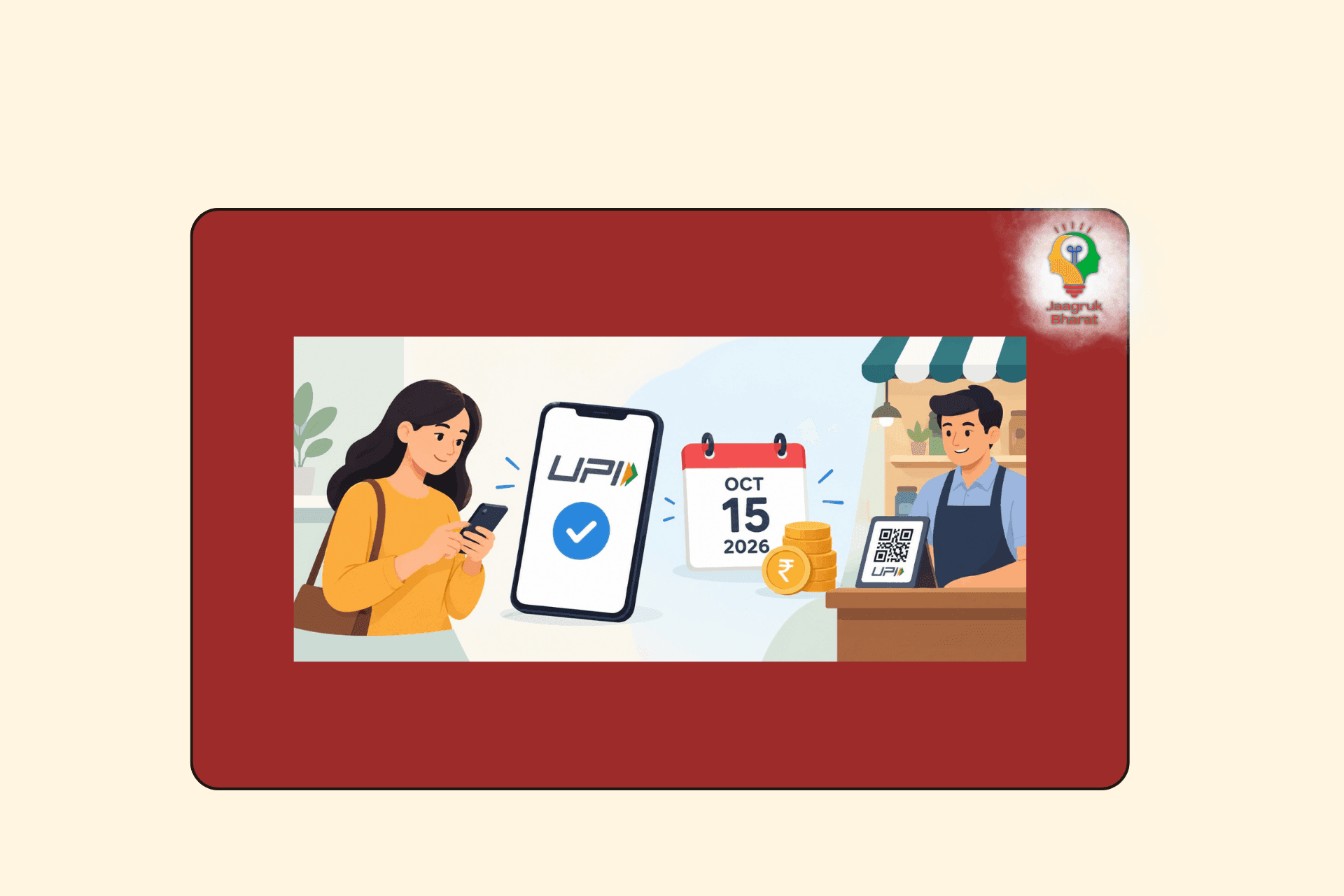
UPI is one of the safest and easiest forms of payment in India. It is used by people to pay family and friends, pay in stores, book services and make online purchases, etc. For years, customers could make these payments without separately paying the UPI transaction fee.
This is about to change with a limited subset of merchant payments on October 15, 2026. Under the new Merchant Discount Rate (MDR) framework, eligible UPI payments made to merchants above ₹2,000 will attract a 0.4% charge, subject to a maximum of ₹300 per transaction. However, the important point is that this charge will be paid by eligible merchants, not consumers. Person-to-person payments will continue to remain free.
In this article, we will discuss the introduction of MDR, its cause, what comes under it, and who the exceptions are in these new changes introduced in UPI.
UPI MDR Overview
The table below highlights the key insights of the Merchant Discount Rate (MDR) framework:-
| Particular | Details |
|---|---|
| New rule starts | October 15, 2026 |
| Main charge | 0.4% MDR on eligible merchant payments above ₹2,000 |
| Maximum MDR | ₹300 per transaction |
| Consumer charge | No direct UPI transaction charge |
| P2P payments | Free, regardless of amount |
| Merchant payments up to ₹2,000 | Free |
| Small merchants | Merchants receiving up to ₹1 lakh per month through eligible UPI QR payments remain under zero MDR |
| Special categories | Certain sectors will have a flat ₹5 MDR above ₹2,000 |
Also Read: UPI Scams And How To Save Yourself From It?
What Is MDR?
MDR is commonly referred to as Merchant Discount Rate. Essentially, it's a fee imposed when someone accepts a virtual transaction. Under the new framework, eligible merchants will pay 0.4% on specified UPI payments above ₹2,000.
Suppose a consumer purchases a ₹3000 worth product from an eligible merchant; the MDR would be about ₹12. If the payment is ₹50,000, the MDR would be ₹200. For transactions of ₹75,000 or more, the standard MDR is capped at ₹300.
| Payment Amount | 0.4% MDR | Applicable MDR |
|---|---|---|
| ₹2,000 | ₹8 | ₹0 |
| ₹3,000 | ₹12 | ₹12 |
| ₹5,000 | ₹20 | ₹20 |
| ₹10,000 | ₹40 | ₹40 |
| ₹50,000 | ₹200 | ₹200 |
| ₹75,000 | ₹300 | ₹300 |
| ₹1,00,000 | ₹400 | ₹300 due to cap |
Will Consumers Have To Pay UPI Charges?
No, consumers will not directly pay the new MDR. If you pay to an eligible merchant, then the amount deducted from your bank account will be the same amount that you authorised. For instance, if you pay an amount of ₹ 3000, the new MDR does not imply that ₹ 3012 would be deducted from your account.
The charge is levied in the merchant's payment system. The financial authorities have also advised that merchants should not pass this MDR directly to customers as an additional UPI charge.
What Consumers Should Remember?
The change is primarily for merchants and not for common UPI users, as such. However, customers should know the basic rules so they can understand what they are being charged for when making digital payments.
-
Under the new MDR framework, customers will continue to transact using UPI without paying a direct transaction fee.
-
Sending money to friends or family through a person-to-person UPI payment will remain free.
-
The standard MDR will not be applied to payments made to merchants, up to a limit of ₹2,000.
-
Merchants should not add the MDR as a separate charge to the customer's UPI bill.
-
Different rules may apply to specified merchant categories with a separate flat-rate MDR.
Which UPI Payments Will Remain Free?
A large part of everyday UPI usage will continue without MDR. This is because the new charge does not apply to person-to-person transfers and does not cover merchant payments up to ₹2,000.
| Type of UPI Payment | MDR from October 15, 2026 |
|---|---|
| Sending ₹5,000 to a friend | ₹0 |
| Sending ₹50,000 to a family member | ₹0 |
| Paying ₹500 at a shop | ₹0 |
| Paying ₹2,000 at a shop | ₹0 |
| Eligible merchant payment above ₹2,000 | 0.4%, subject to applicable rules and cap |
| Eligible small merchant within the ₹1 lakh monthly threshold | ₹0 |
Also Read: Lost Money In The World Of UPI Transactions? Here Is How You Can Get It Back
What Is The New Rule For Small Merchants?
Small merchants have been given a separate zero-MDR provision. Merchants who receive up to ₹1 lakh monthly via UPI QR payments will continue to be in the zero-MDR framework.
This implies that a small businessman who gets payment via a UPI QR code and has a stipulated limit won't have to pay the normal MDR on these transactions. The goal of the provision is to make sure that the new payment charge doesn't impact smaller businesses in the same manner as larger merchants.
Special ₹5 Charge For Some Sectors
The 0.4% rate will not be applied to all eligible payments above ₹2,000. The announced framework defines certain categories to have a flat MDR of ₹5 on UPI transactions of more than ₹2000, including: Railways, Telecom, Insurance, and Fuel.
This means that merchants and businesses should not assume that every payment above ₹2,000 will be calculated in exactly the same way. This rate varies according to the nature of the transaction.
Why Is The UPI MDR Being Introduced?
UPI has grown rapidly and now handles an extremely large number of transactions every month. The most recent monthly data showed that UPI made 24,508.96 million transactions in August 2026, which is approximately 24.51 billion transactions. The total value of these transactions was about ₹29.82 lakh crore.
The scale of these numbers shows how heavily India now depends on digital payments. To keep them operating, payment systems, security solutions and constant technical assistance are needed, as well as fraud monitoring and checking. The new MDR regime is meant to provide a mechanism to cover such costs without impacting a number of key categories of UPI transactions.
How Many UPI Transactions Will Be Affected?
As reported, 96% of person-to-merchant UPI transactions are anticipated to be unaffected by the new framework. All other transactions are anticipated to be in the areas of transaction coverage for MDR.
However, this figure relates to the number of transactions, not their total monetary value. Millions of transactions can represent a lot of money, but a few high-value transactions represent a great deal of money. Therefore, the 96% figure should not be read as meaning that 96% of the total value of UPI payments will remain outside MDR.
Also Read: 1.2% Interchange For Credit Line On UPI
What Does This Mean For Everyday UPI Users?
For most people, the day-to-day experience of using UPI is expected to remain largely the same. Money can be transferred to another person without any UPI transaction charges. Payments made to merchants up to ₹2,000 will also remain outside the standard MDR.
The primary distinction is that businesses with participating eligible transactions will be charged a payment-processing fee. Hence, the consumer should also know that MDR is a merchant-side charge and not a direct UPI payment-side charge.
Conclusion
The new UPI MDR framework will take effect from October 15, 2026. The new system charges a merchant discount rate (MDR) of 0.4% (caps limited to ₹300 per transaction) on each merchant payment amount exceeding ₹2,000. The MDR will not be paid directly by consumers, however.
Person-to-person UPI transfers will continue to be free, and Merchant payments up to ₹2,000 will continue to be free; eligible small merchants who accept UPI QR payments up to ₹1 lakh a month will continue to have zero MDR.
The key change is therefore not that “UPI will become paid”. This new framework, on the other hand, specifies a merchant charge for a particular class of higher-value payments without imposing any charge on most of the common UPI payments.
Get the latest updates on government schemes and policies with Jaagruk Bharat. Join India's biggest Jaagruk Bharat community. Share your thoughts, questions, and favourite topics with us.
0

0
1k
0
0
1k Views
0

No comments available